
*This post may contain affiliate links for which I earn commissions.*
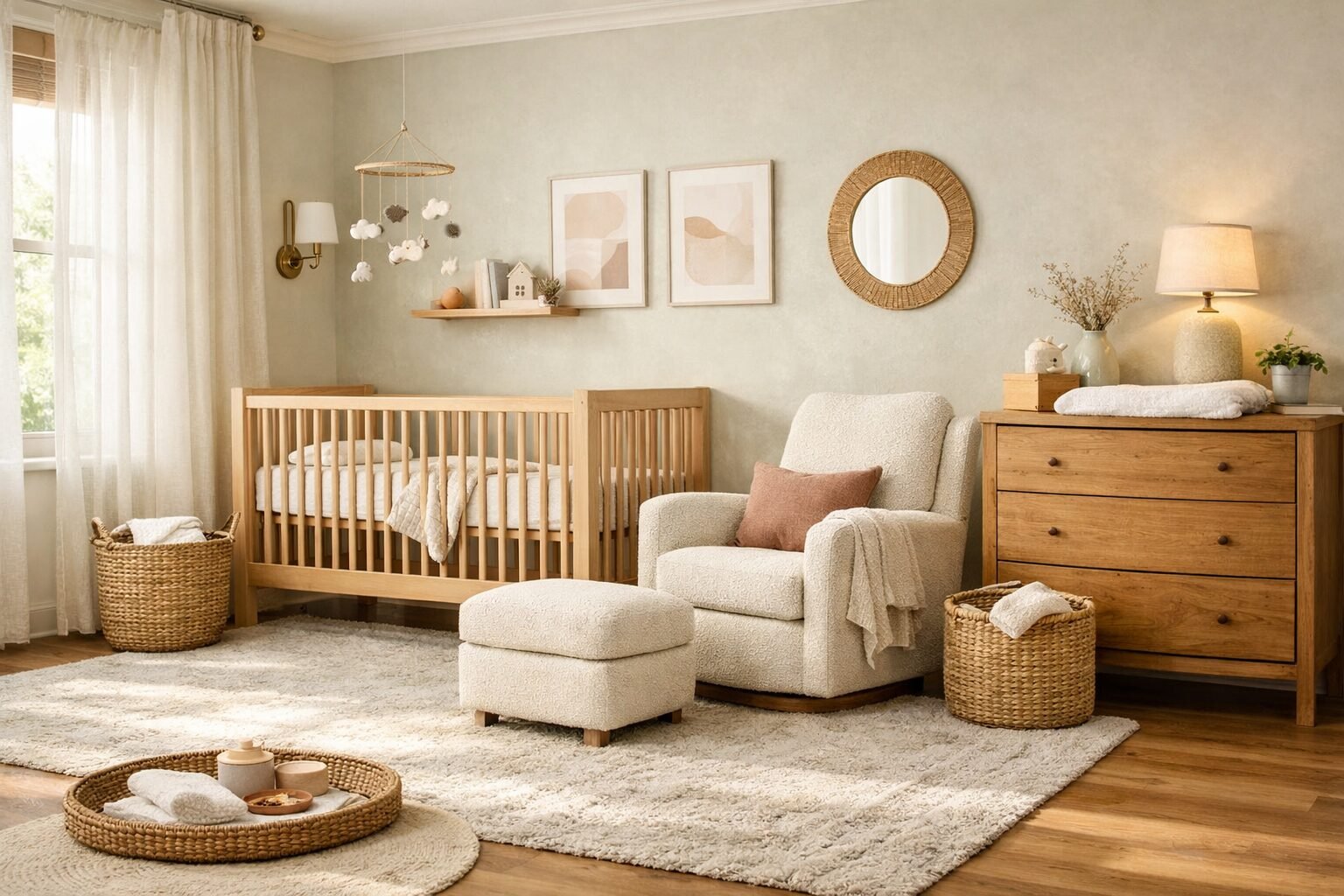
The sweetest small nurseries usually aren’t packed with stuff. They’re the ones with a quiet glow, a soft rug underfoot, and just enough thoughtful details to make the room feel warm when you walk in at the end of a long day. I always recommend that kind of setup, especially for parents working with one small wall, one awkward corner, or a room that has to feel calm from the start.
The Mood + Palette
For this look, I’d keep the palette light and hushed with creamy white, oatmeal, warm beige, pale sage, dusty blush, or a muted clay tone. Soft layers matter more than big statements here, so I’d bring in washed cotton, light wood, boucle, knit textures, and a low, cozy-pile rug. The lighting should feel gentle, not bright, with a warm bulb in a small lamp or sconce so the room stays calm at night. I like rounded shapes in a small nursery because they soften tight corners, like an arched mirror, a curved glider, or a round basket. Natural materials help too, especially oak, rattan, linen, and woven seagrass. Altogether, the room should feel airy yet warm, simple yet never bare.

Visual Ideas to Steal
- Start with a soft, neutral crib wall
I like a crib wall in a warm white or pale greige because it makes everything else feel lighter. Add one small framed print or a quiet wall sconce to finish the space without crowding it. - Try a tonal bedding mix
Layer a fitted sheet, crib skirt, or quilted rail cover in close shades like cream, sand, and soft taupe. That kind of tonal mix keeps the room calm and adds depth even to a tiny nursery. - Use one corner for all the cozy seating
A compact glider with a small pillow and a light throw can make one corner do a lot of work. I would prefer a single, exceptionally comfortable nook over multiple scattered pieces that fragment the room’s overall sense of cohesion. - Choose a dresser that doubles as a changing spot
In a small nursery, this option is one of my favorite moves because it saves space right away. Look for a warm-wood or painted dresser with simple lines, then add a changing pad on top to keep the room practical and tidy. - Bring in a washable rug with a faded pattern
A soft rug grounds the whole room, especially when the walls and furniture are light. I usually lean toward faded floral, tiny grid, or vintage-style motifs because they add interest without feeling busy. I’m oddly picky about rugs that feel too flat underfoot. - Add one woven piece for texture
A wicker hamper, rattan shelf, or seagrass basket can keep the nursery from feeling too smooth or one-note. In a small room, one textured piece often does more than five decorative accessories. - Lean into soft window treatments
Linen-look blackout curtains in ivory, flax, or pale mushroom can make a nursery feel quieter right away. They also add height, which helps a small room feel a little more open. - Keep the art gentle and low-contrast
I’d use simple prints with animals, abstract shapes, moons, leaves, or soft line drawings. When the colors stay muted, the room feels restful instead of visually loud. - Work in open shelving with breathing room
A couple of floating shelves can hold books, a small lamp, and one plush toy without taking up floor space. The key is leaving some space around each item so the shelves feel calm, not crammed. - Layer in a small lamp for evening warmth
Overhead lighting can feel harsh in a nursery, especially at night. A little lamp with a fabric shade adds that low golden glow that makes feedings, rocking, and late-night diaper changes feel a bit softer.

A Few Helpful Picks
• A compact glider with slim arms and a light upholstery fabric can give you a comfortable seat without swallowing up the room.
• A washable area rug in a muted pattern adds soft layers underfoot and helps the nursery feel grounded instead of sparse.
• A dresser-changing table combo keeps the layout practical and cuts down on extra furniture, which really matters in a small space.
[INSERT PRODUCT CAROUSEL / PRODUCT DISPLAY BLOCK HERE]
The Little Details
- Hang curtains a little higher than the window frame to make the ceiling feel taller.
- Use matching wood tones for two or three pieces to make the room feel settled.
- Add a small basket near the chair for burp cloths, swaddles, or bedtime books.
- Keep the mobile light and airy with fabric, wood, or soft felt shapes.
- Swap bright white bulbs for warm light so the nursery feels cozy at night.
- Style the dresser top with just one tray and one soft object to keep it useful.
- Fold a knit blanket over the chair instead of storing every textile out of sight.
Quick tip: In a small nursery, repeating one soft color in three places usually feels more thoughtful than adding five different accents.

Pieces That Pull It Together
- Compact crib
This is your main anchor piece, so I’d look for a crib with a smaller footprint, simple slats, and a light wood or painted finish. It keeps the nursery open and gives the whole room that calm, uncluttered base. - Dresser with a changing topper
This piece works as both a storage and a changing station, which is ideal in a tight room. Look for deep drawers, smooth hardware, and a size that leaves walking space around it. It supports the vibe by keeping everything practical but visually clean. - Small upholstered glider or rocker
A nursery chair doesn’t have to be oversized to feel comfortable. I’d look for soft performance fabric, rounded arms, and a narrower frame that still feels supportive. It adds warmth and creates that lived-in, cozy corner every nursery needs. - Washable area rug
A rug softens the room immediately, making the space feel finished. Look for a low pile, muted pattern, and a size that fits under the crib or chair without wall-to-wall coverage. It brings in texture and keeps the palette soft. - Blackout curtains in a linen-look fabric
These help with sleep, but they also change how the room feels. Look for panels in ivory, flax, pale beige, or soft gray with a little drape. They add softness and quiet to the whole setup. - Woven storage baskets
These are such an invaluable help in a small nursery because they hide clutter while adding texture. I’d look for seagrass, rope, or rattan styles with handles for easy movement. They make the room feel warm and organized at the same time. - Floating shelves or a slim book ledge
Wall storage is a smart move when floor space is tight. Look for shallow shelves in wood or painted finishes that match the rest of the room. They keep books and decor visible without making the nursery feel crowded. - Soft table lamp or wall sconce
Gentle lighting changes everything in a nursery. I’d look for a lamp with a fabric shade, warm bulb, and compact base, or a small sconce with a simple shape. It brings in that evening glow, making the space feel calm. - Crib sheets and textiles in washed cotton or muslin
These are the soft layers that make the room feel cozy instead of bare. Look for breathable fabrics in creamy neutrals, dusty pastels, or subtle patterns. They support the mood by adding comfort without visual noise. - Simple nursery art
Art is what helps a small nursery feel personal. I’d look for soft line drawings, muted landscapes, animals, or abstract shapes in warm tones. It gives the room a gentle focal point without pulling too much attention.
[INSERT SECOND PRODUCT CAROUSEL / PRODUCT DISPLAY BLOCK HERE]
A small nursery can still feel full of warmth, softness, and those thoughtful details that make you want to linger for one more rocking session. I’d start with just one change today, maybe a softer lamp, a better rug, or a basket that clears the clutter, and let the room grow from there!